Emotion-Backed Identity Shifting
The brain is a tunable instrument similar to a car radio. We are living in the frequencies we’ve tuned into. Our current frequency determines how and what we’re feeling in this moment in time. When the pressures and intensity around us feel heavy and dense, we’ve hit static. It is harder to access higher, more expansive states of awareness, higher frequencies, through this mental static.
1/30/20263 min read
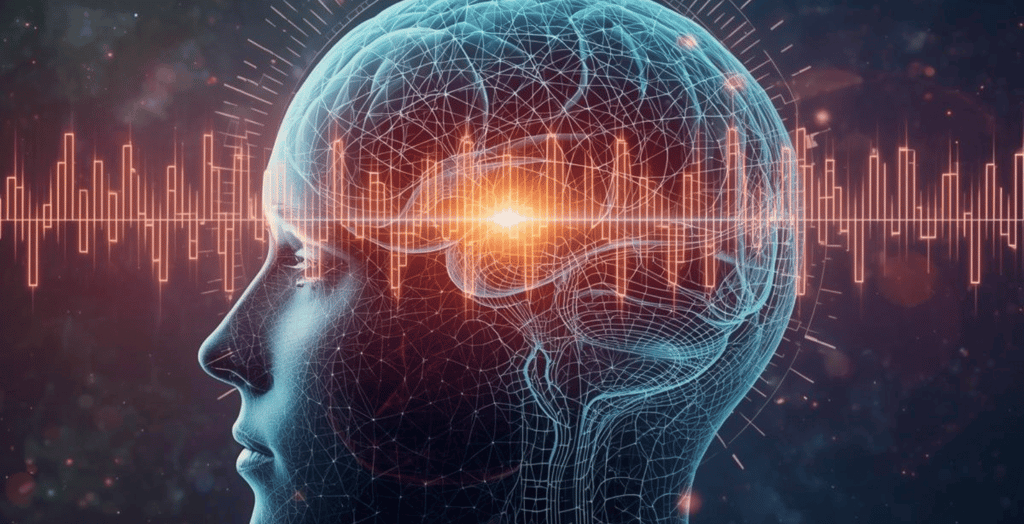
The mind isn’t fixed to broadcast just one channel. It has the ability to – and actually is – constantly being tuned. So when we intentionally slow down our thinking and enter calm, focused states, the brain shifts. Alpha and low-beta activity increases, strengthening the prefrontal cortex’s ability to regulate our body’s emotional responses. Instead of reacting, we are able to now gain more control over how we respond.
This type of shifting is what is referred to as identity shifting. It means writing a new story for ourselves. We change the brain’s default mode of using past events and experiences to predict future events. This shift happens in the present moment, through a conscious decision. In that moment, a new identity becomes available, one we can choose to live from and fully embrace.
How We See Ourselves: How We Identify
Who we believe we are determines the life we live and our future trajectory.
The brain’s job is to keep us aligned with our self-concept. Consciously or unconsciously, the identity we hold shapes our future in two fundamental ways – what we’re able to imagine and what we’re able to do.
When we define ourselves through our past experiences and memories, we mistaken them for who we are in the present. Those experiences are not our identity, merely learned patterns and lessons experienced. Our identity has already shifted, but we remain anchored to memory rather than present awareness.
If we struggle to reach and achieve the goals we want, it is because the goal conflicts with how we’re identifying ourselves, therefore the brain pushes back to preserve consistency with what it knows and believes. So it’s not because of a lack of willpower. It is the identity mismatch that leads to procrastination and self-sabotage, and therefore familiar habits resurfacing.
How Memory and Emotion Create Lasting Change
Emotions play a crucial role in how the brain wires itself. Felt emotions signal the brain in preparation for recollection. They are mechanisms that tells the brain to wire the feeling in and make it easy locate later on. The stronger the emotional response, the stronger and more durable the neural circuits that form and deepen memory traces.
Affirmations repeated without emotion rarely work because they don’t register as meaningful to the brain. When affirmations are said with the feelings of the desired state, this actively rewires neural pathways and allows behaviour to change naturally.
When reciting affirmations, use repetition with emotion. Associating specific words or images with a desired emotional state helps to consolidate and rewire neural circuits in the brain. Practised consciously and over time, this process makes behaviour automatic and lasting changes can occur.
Identity Shifting
Habits, motivation, confidence and consistency don’t exist in isolation. They flow downstream from identity. This is the reason why resetting goals or new strategies and routines might not necessarily create a lasting transformation – stepping into a new identity will.
Stop fighting the brain and start working with it.
Identity work feels uncomfortable because we’re not just changing behaviour, we’re updating the internal operating system that our brain has long used to predict the future.
Once the shift happens, everything else becomes easier. When we see ourself differently, our brain will imagine differently. When the brain imagines differently, we act differently. Over time, these actions create a life that finally matches our desired outcome.


Rewiring Who We Are Becoming
Stay informed
vanita@innerenergyharmony.com.au
"We are all but a spark of the Divine Consciousness, each with our own paths but connected on our shared universal journey in this physical reality. Let's uplift and be a light for each other in the darkness, offering presence, compassion and understanding. In doing so, we reflect the light of awareness within us and help illuminate the way forward for ourselves and for each other."